
HOME EV CHARGING IN CANBERRA AND NEARBY NSW
A charger wired properly, on a circuit your switchboard can actually carry.
Most home charging problems are electrical, not automotive. We look at your switchboard, your supply and your solar before choosing a charger, so you end up with something that charges at the speed you were promised and does not trip the house when the oven is on.
- Single phase allowance, ACT
- Up to 40 A
- Typical single phase charger
- 7 kW
- Three phase charger
- Up to 22 kW
- Solar matched charging
- Worth asking for
the Evoenergy service rules allow one 40 amp appliance such as an EV charger on a phase
roughly 40 kilometres of range an hour for most cars
only if the car can take it, and many cannot
the charger follows your surplus instead of buying from the grid
WHAT ACTUALLY DECIDES IT
The things that shape your design.
What your car can actually accept
The charger is only half the equation. Plenty of cars cap their onboard AC charging at 7 or 11 kilowatts, so a 22 kilowatt charger on the wall changes nothing. We check the car before we quote the charger.
Single phase or three phase
Most ACT and NSW homes are single phase, and a 7 kilowatt charger on a 32 amp circuit suits nearly all of them. The Evoenergy service rules allow a single appliance such as an EV charger up to 40 amps on one phase. Three phase is worth it only when the car and the supply both support it.
What is left in your switchboard
An EV charger is a long continuous load, not a kettle. It needs its own circuit, its own protection and room on the board. Older boards often have none of the three, and that is a cost worth knowing before the car arrives.
Load management, so nothing trips
Where the supply is tight, a charger with dynamic load management measures what the house is drawing and backs itself off rather than tripping the main. That is usually far cheaper than a supply upgrade.
Charging off your own solar
Several chargers will follow your surplus and charge only from what you would otherwise export. Against the gap between what you pay for power and what you are paid to export it, that difference is most of the value of charging at home.
Where the car actually parks
Cable length, whether the lead can be left out in the weather, whether you want a tethered lead or a socket, and whether a second car is coming. Carport, garage and kerbside are three different jobs.
Worth knowing before you compare quotes
The charger is cheap and the circuit is not. Compare quotes on the whole job: the cable run, the breaker and protection, any switchboard work, and whether load management is included or assumed away. Ask whether the charger is OCPP capable, because that decides whether you can move it to another network later, and check the model is on the approved list if you want to use a loan or an incentive.
NOT A STOCK PHOTO
The equipment we actually install.
Every one of these has its own page with real specifications, current pricing and the questions worth asking. Nothing here is a placeholder.
EV charging 7
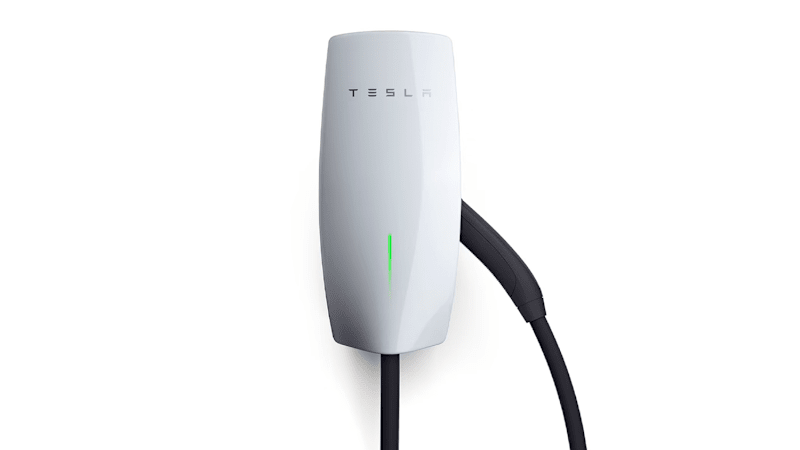
Tesla Wall Connector
A home charging option with Tesla app scheduling and monitoring. Charging speed depends on the vehicle and installation.
From $1,896 including GST
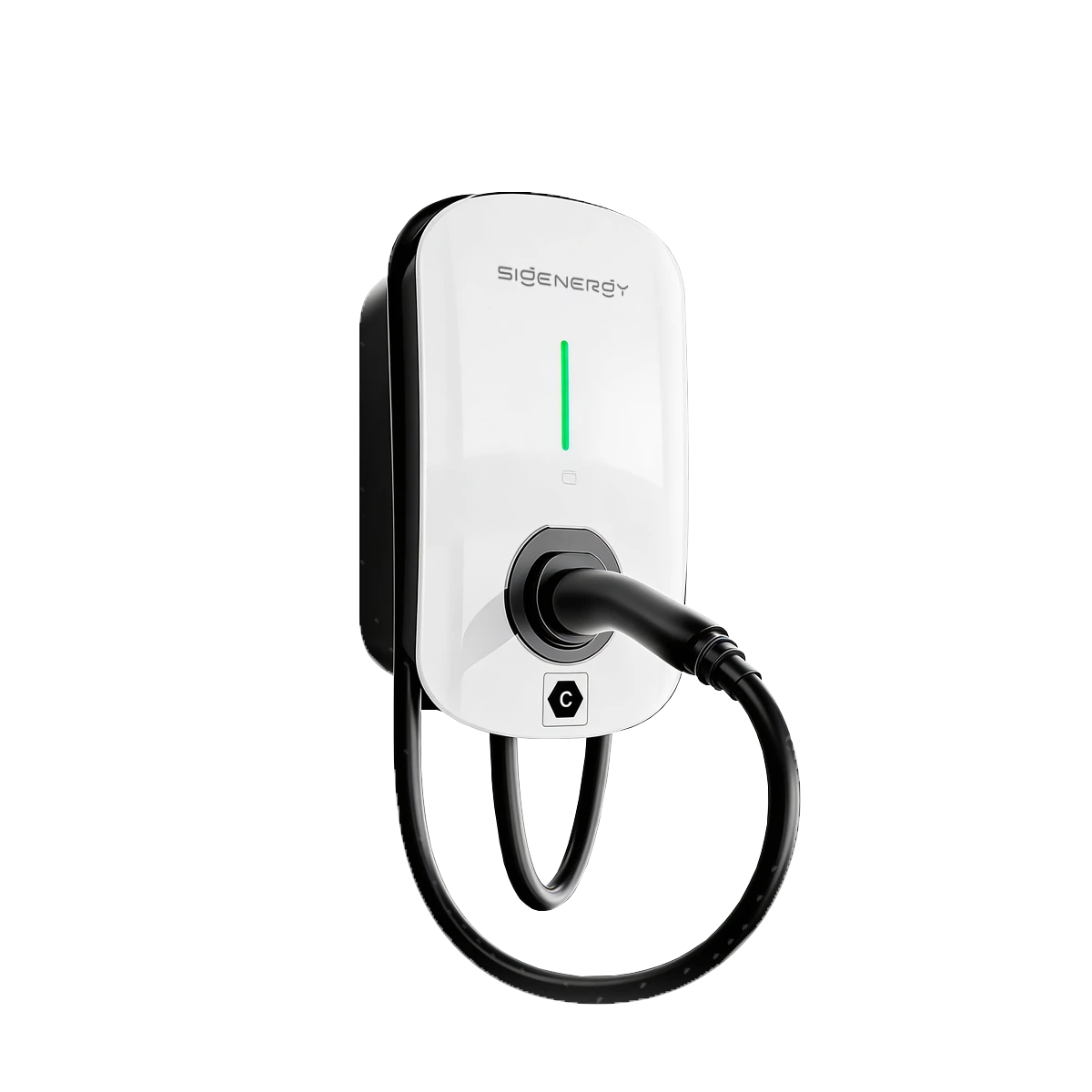
Sigen EV AC Charger
Sigenergy's AC charger range includes 7, 11 and 22 kW variants. The suitable variant depends on your supply and vehicle.
From $2,373 including GST
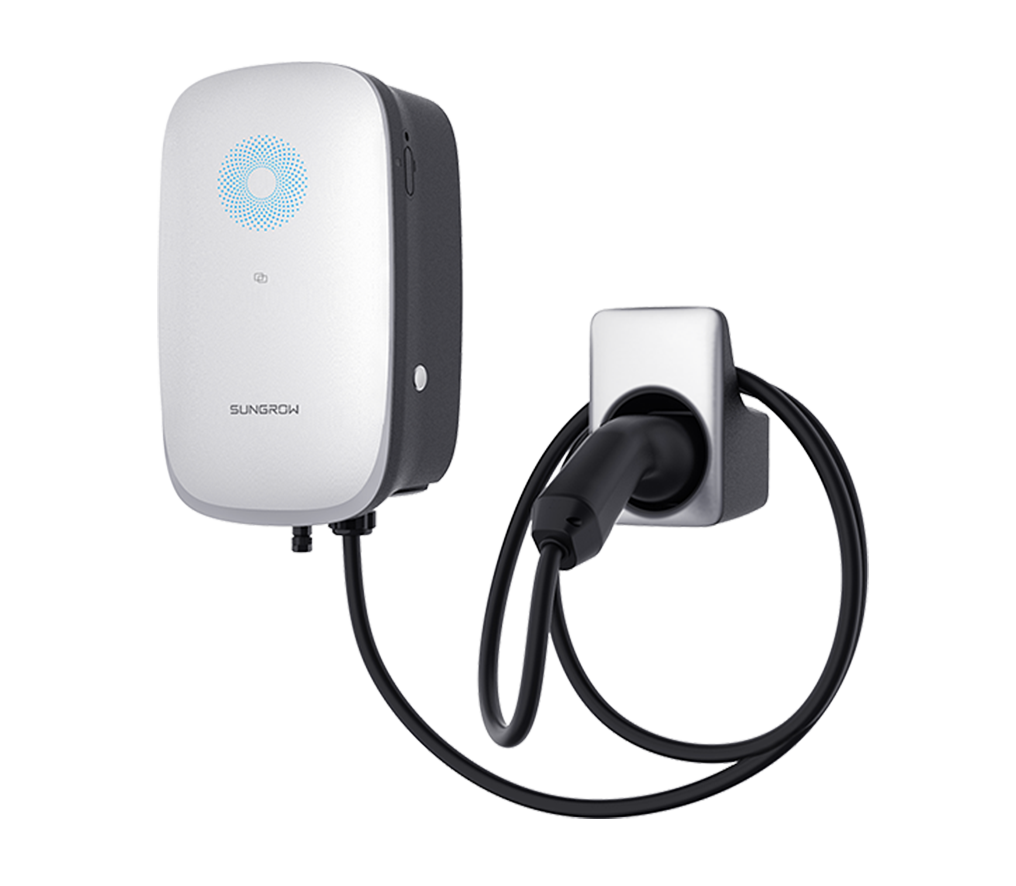
Sungrow AC22E EV charger
A tethered Type 2 charger that can be set to 22 or 11 kW on three phase, or 7.4 kW on single phase. In Australia it runs in Sungrow's energy management mode alongside a Sungrow hybrid inverter for solar-surplus charging, managed in iSolarCloud.
From $2,089 including GST
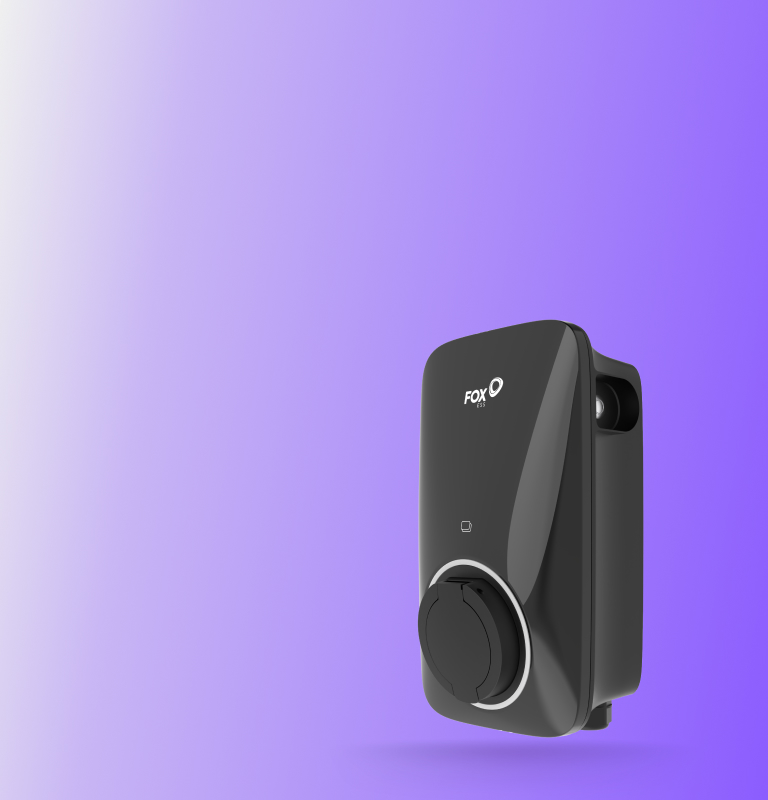
FoxESS A Series EV charger
A compact tethered Type 2 charger in 7.3 kW single-phase and 22 kW three-phase versions, with solar-surplus charging, dynamic load balancing and OCPP 1.6J and 2.0.1 support.
From $2,063 including GST
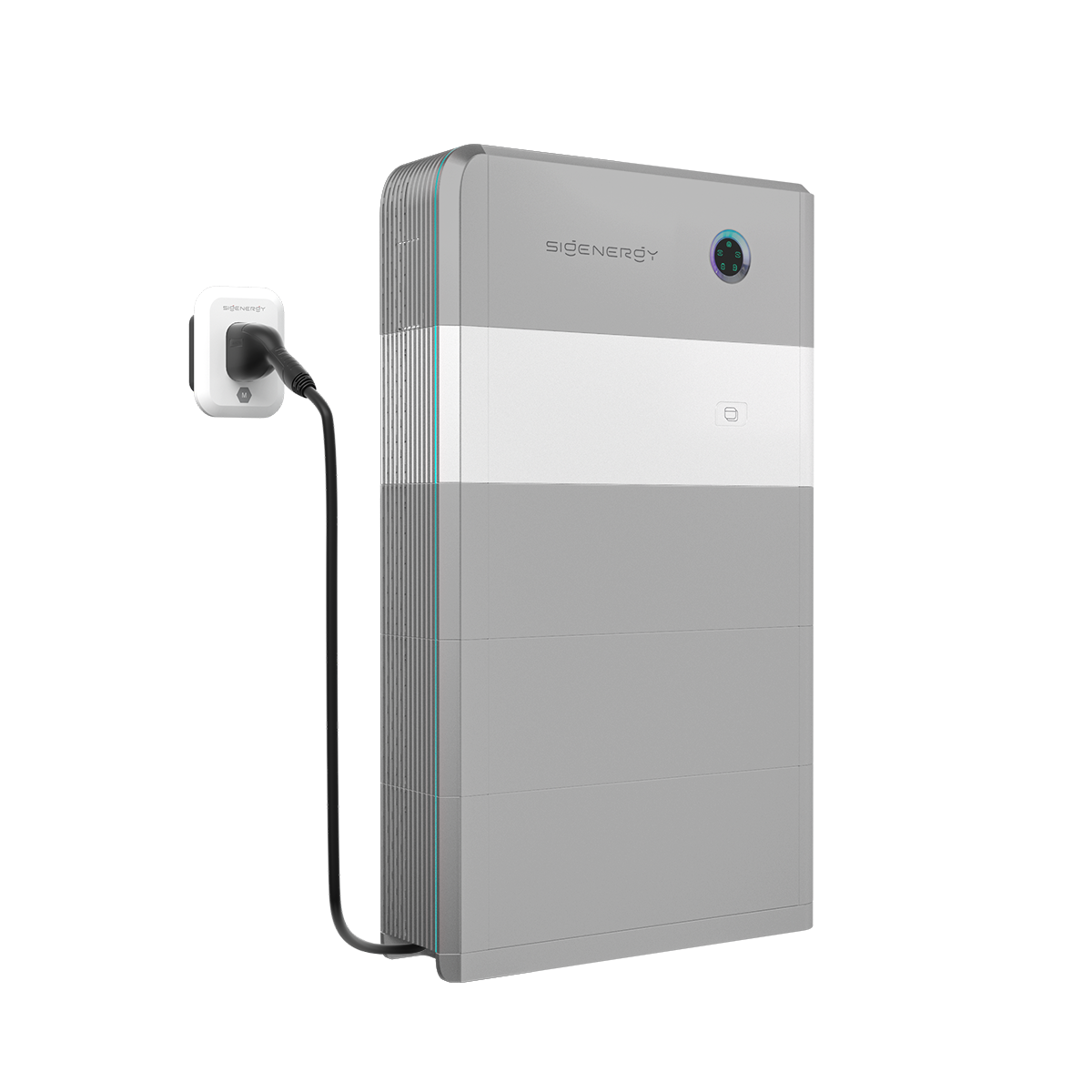
SigenStor EV DC charger
A DC fast-charging module that stacks into a SigenStor system and charges an EV straight from solar and battery at 12.5 or 25 kW. It is bi-directional, so it can supply the home from a compatible car.
$4,659 From $4,342 including GST Save 7%
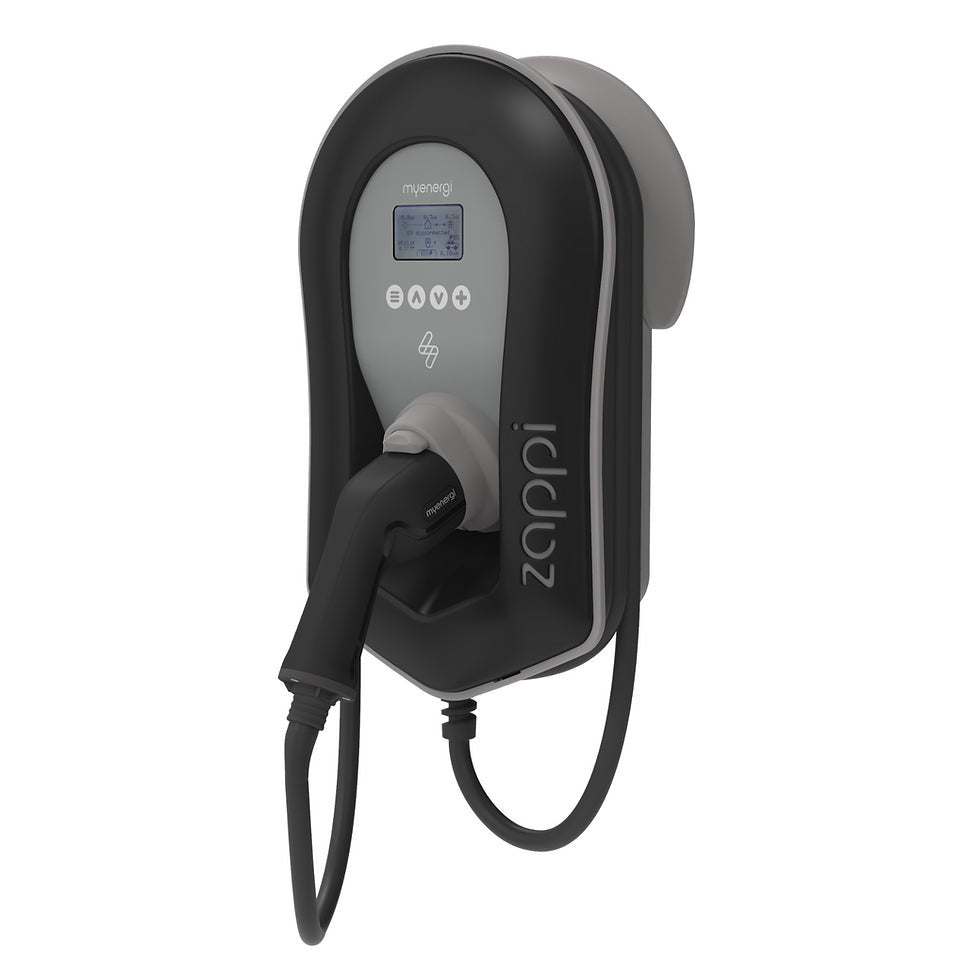
myenergi zappi EV charger
The zappi V2.1 from myenergi: a 7/22 kW tethered EV charger with a 6.5 m cable, Wi-Fi and Ethernet built in, and three CTs in the box. White or black.
From $2,894 including GST
Sungrow 30 kW DC fast charger
Sungrow's 30 kW DC charger with a 5 m cable, for businesses and fleets. A standing pole or a trolley can be added. Installation is quoted for each site.
From $17,875 including GST
WHAT YOU ARE ACTUALLY BUYING
What is included, and what is not.
Included as standard
- A dedicated circuit, protection, and the run from the board to where the car parks
- Charger supply, mounting and commissioning
- Configuration for solar matched charging where the charger supports it
- Load management setup where the supply calls for it
- Certificate of Electrical Compliance, and network notification where it is required
- A walk through of the app, scheduling and off peak charging
What can add to it
We look for every one of these before quoting. Anything that applies is priced in writing before you commit.
- Switchboard upgrade where there is no room or no main switch
- Supply upgrade from the street, which is network work and network priced
- Trenching or underground conduit to a detached garage or carport
- Making good render, brickwork or plaster where a cable has to pass through it
- Strata approvals, common property applications, and metering for shared parking
What counts as a standard job
A standard install is a charger on a wall within about fifteen metres of cable run from a switchboard that has a main switch and room for the new protection, in a single dwelling with an accessible route for the cable. Longer runs, detached buildings, strata parking and boards with no spare capacity are all priced separately and in writing.
WHAT YOU CAN ACTUALLY CLAIM
Rebates, and who they are for.
Rebates change often and most of them have conditions that decide whether you qualify. These are the ones that apply here, with the catch stated rather than buried.
ACT
Sustainable Household Scheme
Loans from 2,000 to 20,000 dollars at 3 per cent over up to 10 years cover both electric vehicles and home charging equipment for ACT residents. You attend a free Everyday Climate Choices workshop first, and the loan is credit assessed.
ACT
No charger rebate, and the EV concessions have narrowed
There is no ACT rebate for a home charger. Two years of free registration for zero emission vehicles ended on 30 June 2024, and the stamp duty exemption ended on 31 August 2025. Zero emission vehicles do still sit in the cheapest band of the ACT emissions based registration.
NSW
Home Energy Saver
Zero interest loans of up to 15,000 dollars for households with a combined income up to 210,000 dollars, and a level 2 EV charger is on the eligible list along with switchboard upgrades. This is currently the only NSW support for home charging.
NSW
No current EV or charger rebate
The 3,000 dollar NSW electric vehicle rebate and the stamp duty exemption both ended on 1 January 2024, and the EV Ready Buildings grant for apartment buildings closed in December 2023. For strata, NSW currently offers guides and by-law templates rather than funding.
Rebate information last checked 20 September 2026. We confirm what you qualify for, in writing, before anything is ordered.
HOW IT ACTUALLY GOES
From first call to switched on.
- 1
Tell us the car and the address
The car sets the useful charging speed. The address tells us the network and, often, the vintage of the switchboard.
- 2
We check the board and the supply
Main switch, spare ways, protection type, the size of your main, and whether load management will save you a supply upgrade.
- 3
The charger is chosen to the job
Tethered or socket, single or three phase, solar matched or scheduled, and OCPP capable if you want the option of moving networks later.
- 4
Fixed price, including the boring parts
The circuit, the run, the protection and any switchboard work, all named. This is where cheap quotes hide.
- 5
Install and commission
Usually half a day, longer if the cable run is long or the board needs work.
- 6
Handover
Scheduling set up, solar matching configured, and a demonstration on your own car.
THE QUESTIONS WE GET ASKED
Straight answers.
How fast will it actually charge?
A 7 kilowatt single phase charger adds roughly 40 kilometres of range an hour, which takes almost anyone from empty to full overnight. A 22 kilowatt three phase charger only helps if your car has a three phase onboard charger, and many popular models do not.
Do I need three phase?
Usually not. Most homes here are single phase, and the Evoenergy service rules allow a single appliance such as an EV charger up to 40 amps on one phase. Three phase is worth considering if you already have it, if the car supports it, and if you genuinely need to add range quickly during the day.
Can I just use the cable that came with the car?
For occasional charging, yes, on a proper outlet. It is slow, and a standard power point was never designed for a load drawn for eight hours at a time. A dedicated circuit is the right answer for daily charging.
Will it charge from my solar?
With the right charger, yes. It watches what you are exporting and uses that instead of buying from the grid. Given the gap between the retail rate and the feed-in tariff, that is where most of the saving at home comes from.
Do I need permission from my network?
A charger is a load, not a generator, so it does not go through the same approval as solar. Depending on size and supply, the network may still need to be notified, and if your main supply needs upgrading that is network work. We handle the notification.
What about charging in an apartment?
It is doable, but it is a different project involving the owners corporation, common property, metering and often a shared supply with load management. NSW publishes by-law templates and planning guides for strata, and there is no grant open at the moment.
Getting an EV, or already charging off a slow lead?
Tell us the car and the address. We will check what your switchboard can carry and quote the whole job, circuit included, not just the box on the wall.
Where people usually go next
 4.8133
 4.7157
Prices on this website are for the ACT and within 35 km of Canberra. Further out, the same system usually costs 15–30% more for travel, time away and the extended warranty responsibility that comes with distance. We confirm the final price before you commit to anything.